
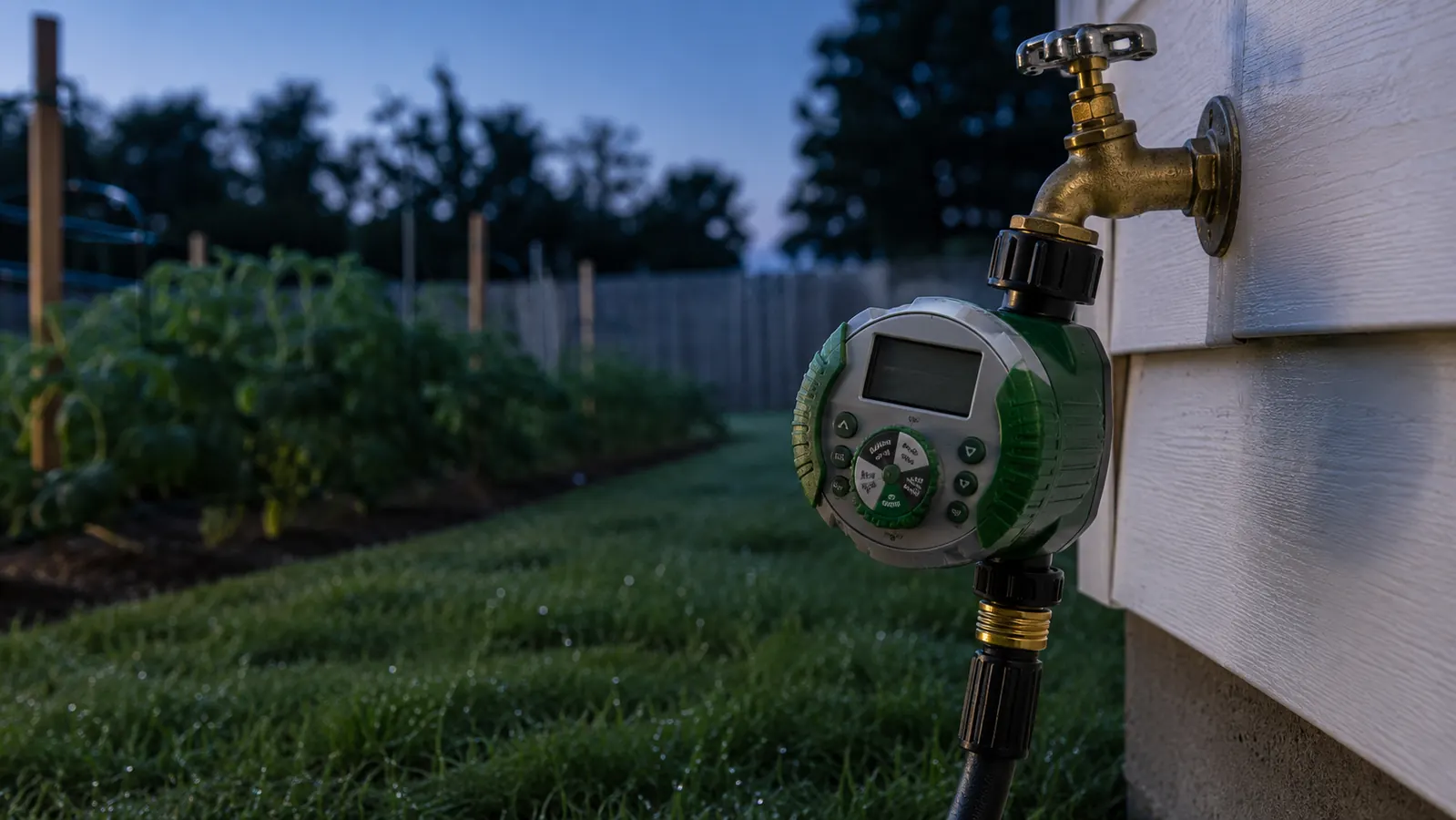
I set the Orbit Programmable Hose Watering Timer up on a Tuesday morning in February, still in the dark, about twenty minutes before I needed to leave for a 6 a.m. shift. I remember the exact morning because it was cold enough that my hands were stiff working the little rubber buttons, and I almost gave up and decided I'd just water the beds when I got home that night, like I always did. I'm glad I didn't. That timer has run every single morning since, rain delay and all, and it's the reason my tomato rows and the perennial bed along the fence didn't go patchy and stressed the way they used to every year I tried to water on whatever schedule my job allowed.
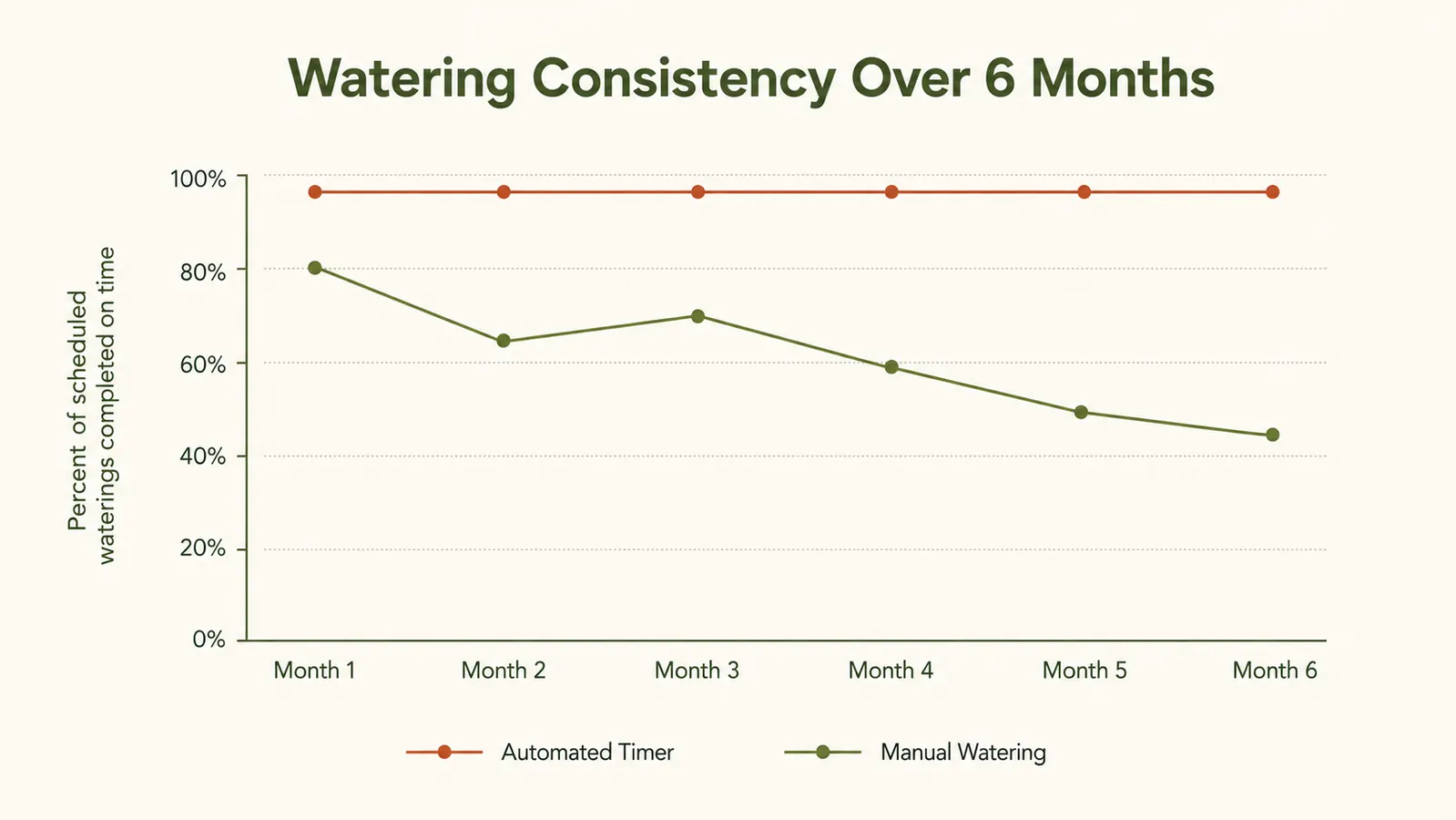
I've had three garden hose timers over the years, two of them cheaper models that quit working inside a season. This is the first one I've kept running for six full months without a single missed cycle, so I want to walk through exactly what that looks like day to day, not just what the box promises.
At a budget-friendly price, this wasn't a big gamble either way, but I'd already spent close to that much twice before on timers that ended up in the trash by August. So the real question for me wasn't whether it was cheap, it was whether it would still be working when the weather turned hot and I stopped babying it.
The Quick Verdict
A genuinely reliable, easy-to-program timer that solved my actual problem, which was watering consistently on a schedule I don't have time to babysit.
Amazon Check Today's Price →Stop rushing outside before work just to turn on the hose.
The Orbit timer does the 6 a.m. watering run so you don't have to be awake for it. Check today's price and see if it fits your setup.
Amazon Check Today's Price on Amazon →Setting It Up the First Time
The timer screws directly onto the hose bib, and then your hose screws onto the timer, so it sits right at the spigot rather than somewhere down the line. That matters more than I expected, because it means the timer controls water at the source, not through some extra fitting that can leak. Mine threaded on with a rubber washer already seated inside, and I didn't need Teflon tape or a wrench, just hand-tight, and it hasn't dripped once.
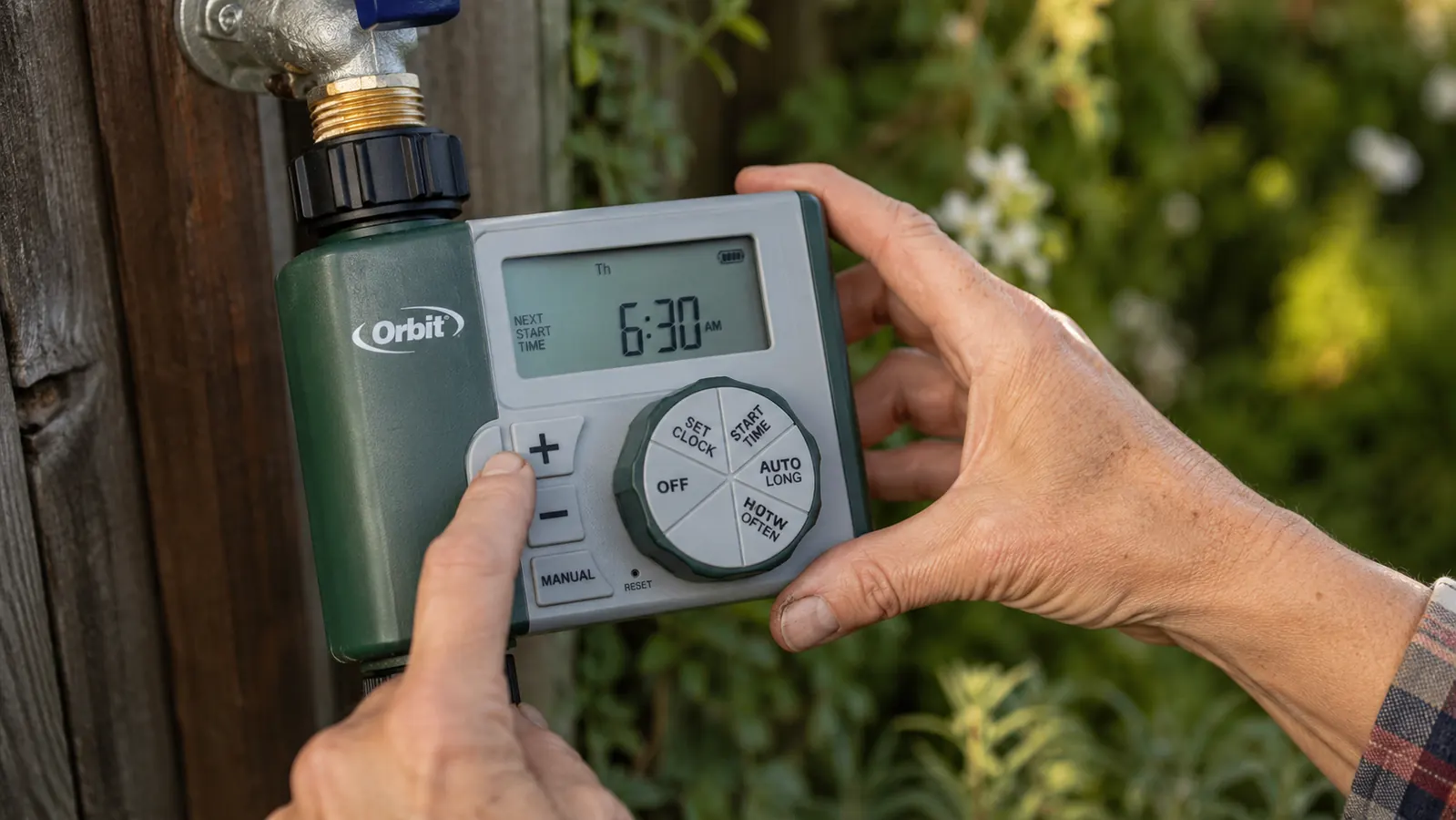
Programming asks you to set the current time, then a start time and a run duration for up to two independent programs. I set mine up standing in the cold with a headlamp on, cycling through the menu with the mode button and adjusting minutes with the up and down arrows. It's not intuitive on the first pass, and I did have to backtrack once when I accidentally set a program for 5:40 p.m. instead of a.m., but by the second time through it clicked, and I haven't needed the manual since.
How I've Used It
My setup is simple. One hose runs from the spigot through the timer, then splits into a soaker hose that snakes along the tomato and pepper rows, and a second line with a sprinkler head for the perennial bed. I programmed the timer for two cycles, one at 5:40 a.m. for twelve minutes on the vegetable rows, and a shorter six-minute cycle at 5:52 for the perennial bed, so the water pressure doesn't drop when both would technically want to run at once.
The programming itself took me about ten minutes the first time, mostly because I was reading the little booklet by phone flashlight. After that first setup, I've only gone back into the menu three times in six months: once to push the schedule twenty minutes later after daylight saving time, once to add a third short cycle during a stretch of 95 degree days in July, and once to knock it back down when September cooled off. Each of those adjustments took under two minutes.
The screen is a basic LCD, nothing fancy, but I can read it in full sun and in the dark with my phone light, which matters more than it sounds like it would when you're standing outside half awake at 5:30 in the morning. I've also gotten used to glancing at it on my way to the car, just a quick check that it's counting down or sitting idle the way it should be, and that habit alone has replaced the mental note I used to carry around all day wondering if I'd remembered to water anything.
The Rain Delay Feature, Actually Tested
We had a wet stretch in April, nearly ten days of on-and-off rain, and this is where I expected the timer to either ignore the weather entirely or force me to manually shut it off every night. Instead there's a rain delay button right on the front, and pressing it once suspends the schedule for 24 hours, with the option to stack it for up to 72 hours. I pressed it on a Sunday night before a run of storms and didn't think about the timer again until Thursday, when it picked the schedule back up exactly where it left off.
It's a manual delay, not a soil moisture sensor or a weather API pulling forecasts automatically, so you do have to remember to press the button. I keep a sticky note on my kitchen calendar during rainy stretches so I don't forget, and that's really the only extra step this timer has asked of me in six months. There was one Saturday in May where I forgot to press it after a surprise storm rolled through overnight, and the timer just ran its normal cycle on top of already-soaked soil. Nothing drowned, but I noticed the ground was soggier than it needed to be for a day, which is the one gap I'd flag if you're someone who tends to forget small chores like that.
Battery Life and Weather Resistance
The timer runs on two AA batteries, and I put fresh ones in the day I installed it. Six months later, the battery indicator on the screen still shows full. It's mounted on an east-facing spigot that gets direct morning sun and full exposure to rain, wind, and one hailstorm in May that dented a patio chair. The timer itself shows no cracking, no water getting into the battery compartment, and the buttons still respond the same as day one, though I do wipe pollen and dirt out of the seams every few weeks with an old toothbrush.
I did have one morning in March where the display looked frozen on the wrong time. I pulled the batteries, put them back in, and re-set the two programs, and it's run clean ever since. That's the only hiccup I've had, and it cost me about five minutes. I also went through a hard freeze in late February before I fully trusted the seals, so I disconnected the hose and let the timer sit empty overnight on the coldest nights, just out of habit from losing a cheaper timer to a cracked valve years ago. It's held up fine through the milder cold snaps I left it connected for since.
How It Compares to Hand-Watering My Old Schedule
Before this timer, I was watering whenever I had a spare fifteen minutes, which in practice meant some evenings after a long shift, some early mornings, and more than a few days where the beds just didn't get watered at all because I was too tired to think about it. My tomatoes showed it. Cracked skins from inconsistent moisture, blossom end rot on the peppers twice that first year, and a perennial bed that looked stressed by mid-July every summer.
This year, watering at the exact same time every morning, before the sun gets high and before the day's heat starts pulling moisture out of the soil, made a visible difference by June. No blossom end rot on the peppers. The tomatoes split less because they weren't going from bone dry to soaked in one evening dump. I'm not going to claim the timer alone did all of that, since I also mulched heavier this year, but the consistency it gave me is something I genuinely could not manage on my own with my work schedule.
There's also a time cost that's easy to forget when you're comparing a thirty dollar timer to just doing it yourself for free. Hand-watering my rows properly used to take me close to twenty minutes standing there holding the hose, moving it every few minutes so nothing got flooded or missed. Six months of that, most mornings, adds up to real time I've gotten back, even if it's just twenty minutes before a shift that starts at six.

Who Else I Talked to About Alternatives
Before buying this one, I looked hard at the smart, app-connected timers that let you control watering from your phone. My neighbor down the street has one, and he likes checking the app, but he's also had it lose connection to his home wifi twice and miss a cycle without him noticing until his beds looked dry three days later. I don't have great wifi reception at my spigot, tucked around the side of the house, and I didn't want a watering schedule that depends on a signal. The Orbit timer is fully mechanical in the sense that it doesn't need wifi or an app at all, which for my situation was the whole point. I wanted something I could set once and trust, not something else to check on my phone.
I also seriously considered a basic mechanical dial timer, the kind you twist and it winds down and shuts the water off, no screen at all. Those are cheaper and there's nothing electronic to fail, but they can't run at a fixed time on their own, someone still has to physically go turn the dial each morning, which defeats the entire reason I wanted a timer in the first place. If you're weighing that tradeoff yourself, it's worth reading through it in more detail, since the two solve genuinely different problems.
What I Liked
- Reliable daily cycles with zero missed runs over six months
- Rain delay button is fast and genuinely works, up to 72 hours
- No wifi or app needed, which matters if your spigot has poor signal
- Battery still reads full after six months of daily use
- Holds up to direct sun, rain, and one hailstorm with no damage
Where It Falls Short
- Rain delay is manual, not automatic based on actual rainfall
- LCD screen is basic, no backlight for reading in full dark without a phone light
- One display freeze in six months required a battery reset
- Single outlet means you need a splitter for more than one hose line
I stopped thinking about watering at all sometime around April, and that's when I knew it was actually working.
Who This Is For
If your garden schedule is dictated by a job that starts early or runs long shifts, this timer solves the exact problem it's meant to solve. It's also a good fit if you've been burned by cheaper timers that quit mid-season, since the build has held up better than the two I owned before it. And if you don't want another app to manage, the fact that it runs entirely on the device itself, no phone required, is a real feature, not a limitation.
Who Should Skip It
If you want automatic rain sensing that adjusts the schedule without you pressing a button, or you want to check and change your watering schedule from your phone while you're at work, look at the smart, wifi-connected timers instead. This one asks you to be a little bit involved, checking the forecast yourself and pressing rain delay when needed. For me that's a fair tradeoff for something this dependable, but it's worth being honest about before you buy.
Six months of mornings I didn't have to think about the hose.
If your garden needs water before you're even out of bed, this is the timer that's handled it for me without a single missed cycle. See today's price on Amazon.
Amazon Check Today's Price on Amazon →