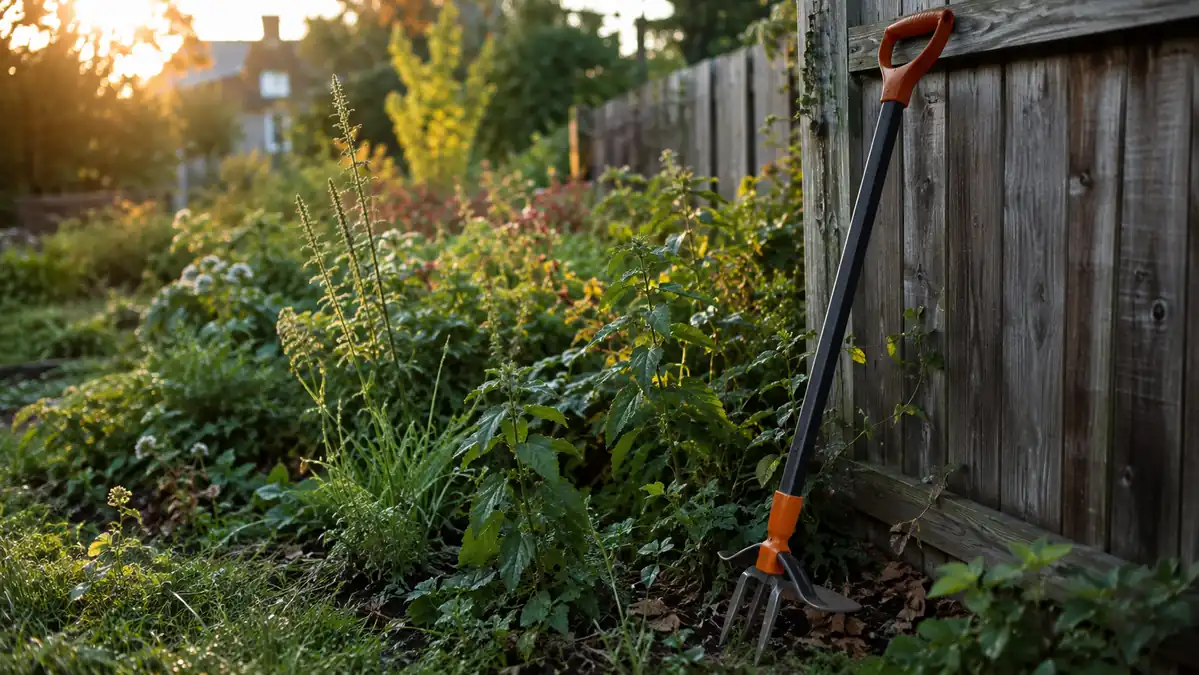
There is a specific kind of dread that comes from looking out the kitchen window on a Tuesday morning and seeing a bed you have been ignoring for two weeks. Dandelions gone to seed, a spreading mat of chickweed, something with a taproot I still cannot identify by the fence line. I have a shift that starts at 8, which means I get maybe twenty minutes outside before I need to shower and go, and for years that twenty minutes was not enough time to do anything real about weeds. Kneeling down, finding the trowel, working one patch, standing back up with a bad knee and dirt on my scrubs. By the time I was upright again I had used half my window and cleared about four square feet.
The thing that changed this for me was switching to a stand-up weed puller, specifically the Fiskars Stand-Up Weed Puller, and changing how I approached the twenty minutes rather than trying to fit the old method into a smaller box. What follows is the actual method I use now, the one that gets a full bed cleared in a morning or two instead of a lost weekend, using the tool's four serrated claws and foot platform instead of a kneeling pad and a hand trowel.
Clear a Bed Standing Up, Not Kneeling in the Dirt
The Fiskars Stand-Up Weed Puller lets you step on a foot platform, press four serrated claws into the soil around a weed, and eject the whole root system with one motion, no kneeling, no bending, no trowel. It is the tool that made my before-work weeding window actually count for something.
Amazon Check Today's Price on Amazon →Step 1: Walk the Bed the Night Before and Mark Your Route
I do this the evening before, usually after dinner while there is still light. I walk the bed slowly and just look, not pulling anything yet, and I mentally sort the weeds into two piles. There are the shallow ones, chickweed, henbit, young crabgrass, that come up with almost no effort. And there are the deep-rooted ones, dandelion, dock, bindweed runners, that need the claws to get the whole root or they will just come back in a week. This sorting matters because in the morning you do not have time to think, you just want to move down a line and pull.
I usually stick a few short bamboo stakes at the start and end of the stretch I want to hit the next morning, maybe six feet of bed, so I am not standing there at 6:40am trying to decide where to begin. If the bed is bad enough that six feet feels ambitious, I break it into three mornings instead of one. That is a perfectly fine way to do this. A cleared six feet every morning for three days beats an ambitious plan that falls apart on day one.
This is also when I check the soil. If it rained recently or the ground is naturally damp where I garden, the claws will sink in easily and roots come up almost whole. If it has been dry for a stretch, I run a hose over the stretch I marked for about five minutes the night before. Dry, hard soil is the single biggest reason a stand-up weeder underperforms, and a five minute soak the night before fixes almost all of it.
I also glance at the weather app before I go to bed. A morning with rain forecast before 7am changes my plan entirely, since I would rather do the pass the evening before than stand out in it at dawn in work clothes. This sounds like a small thing but it has saved me more than one soggy sock situation over the years.
Step 2: Set Up at the Start of the Row Before You're Fully Dressed for Work
I keep the Fiskars in the same spot by the back door all season, leaning against the same fence post, so I am never hunting for it in the morning. I go out in whatever I slept in or an old t-shirt, before I have showered or put on anything for the day, because this is dirty work and I do not want to be careful about my clothes while I am doing it. Shoes with a solid sole matter here, since you are pressing your foot down on the platform repeatedly. I wear an old pair of sneakers I keep by the door for exactly this.
I also bring a five gallon bucket or a tarp, whichever is closer, and set it at the near end of the row I marked the night before. Every weed goes straight into it as it comes out. Do not lay pulled weeds on the ground next to the bed, especially anything that has gone to seed, because you will end up reseeding the exact spot you just cleared. This one habit alone has cut my repeat-weeding by a noticeable amount over a season.
One more small setup detail that took me a season to figure out. If the handle length is not adjusted to your height, you end up hunching forward slightly with every pull, which defeats half the point of a stand-up tool. Most of these weeders let you extend or lock the shaft at a couple of heights. I am not tall, so I keep mine set a notch shorter than the default, and it makes the difference between standing fully upright and still leaning.
Step 3: Position the Claws and Use Your Body Weight, Not Your Arms
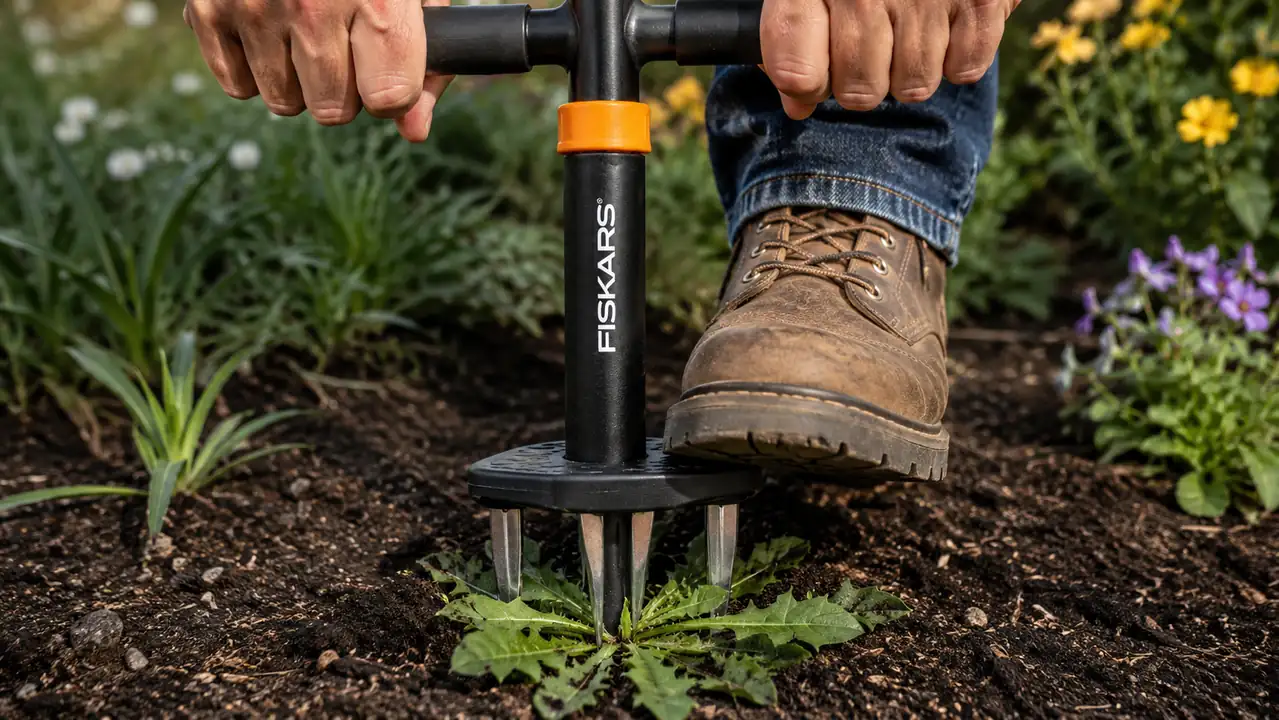
Center the four claws around the base of the weed so they straddle the root rather than sitting off to one side. Then step down on the foot platform with your full weight, the same way you would step down to plant a shovel. This is the part that took me a week to unlearn. My instinct at first was to push down with my arms and shoulders, which is tiring and does not actually drive the claws deep enough. Your legs are stronger than your arms, and the platform is designed to take your body weight, so let it.
Once the claws are seated, the handle does the rest. Pull back on the Fiskars' offset handle in one steady motion, no jerking, and you will feel the claws close around the root as it lifts. For a dandelion or a young dock plant, the whole taproot usually comes up intact. For something with a shallow, spreading root system, the claws will lift a clump of soil with several weeds tangled in it, which is fine, you just knock the loose soil back into the bed and drop the weed clump in the bucket.
The one exception I have found is heavy clay soil right after a dry stretch. If your ground is more like the packed clay I have along the back fence than loose loam, one press of the foot platform may not get the claws fully seated. I just add a second small press before pulling back, rocking my weight forward and down again, rather than forcing the handle through soil that has not given way yet. Forcing it is how you end up with a snapped root and a weed that comes right back.
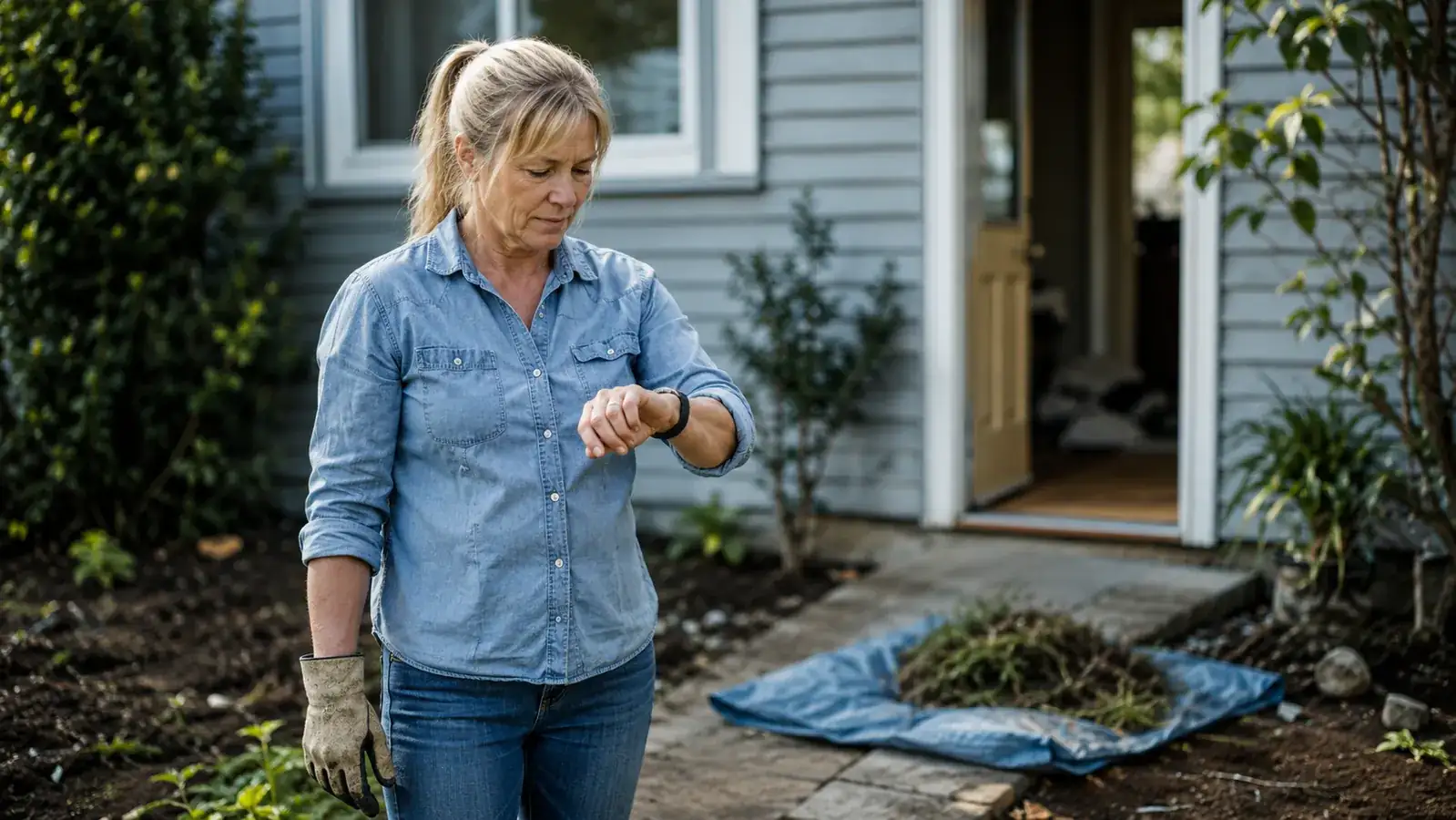
Step 4: Eject and Move On Without Bending Down
This is the step that actually saves the time. Once the weed is lifted and gripped in the claws, there is an eject mechanism, usually a second lever or a squeeze action depending on your exact model, that releases the root without you having to bend down and pull it out by hand. Aim it toward your bucket or tarp as you eject. It takes maybe two mornings to get your aim consistent, and after that it becomes automatic.
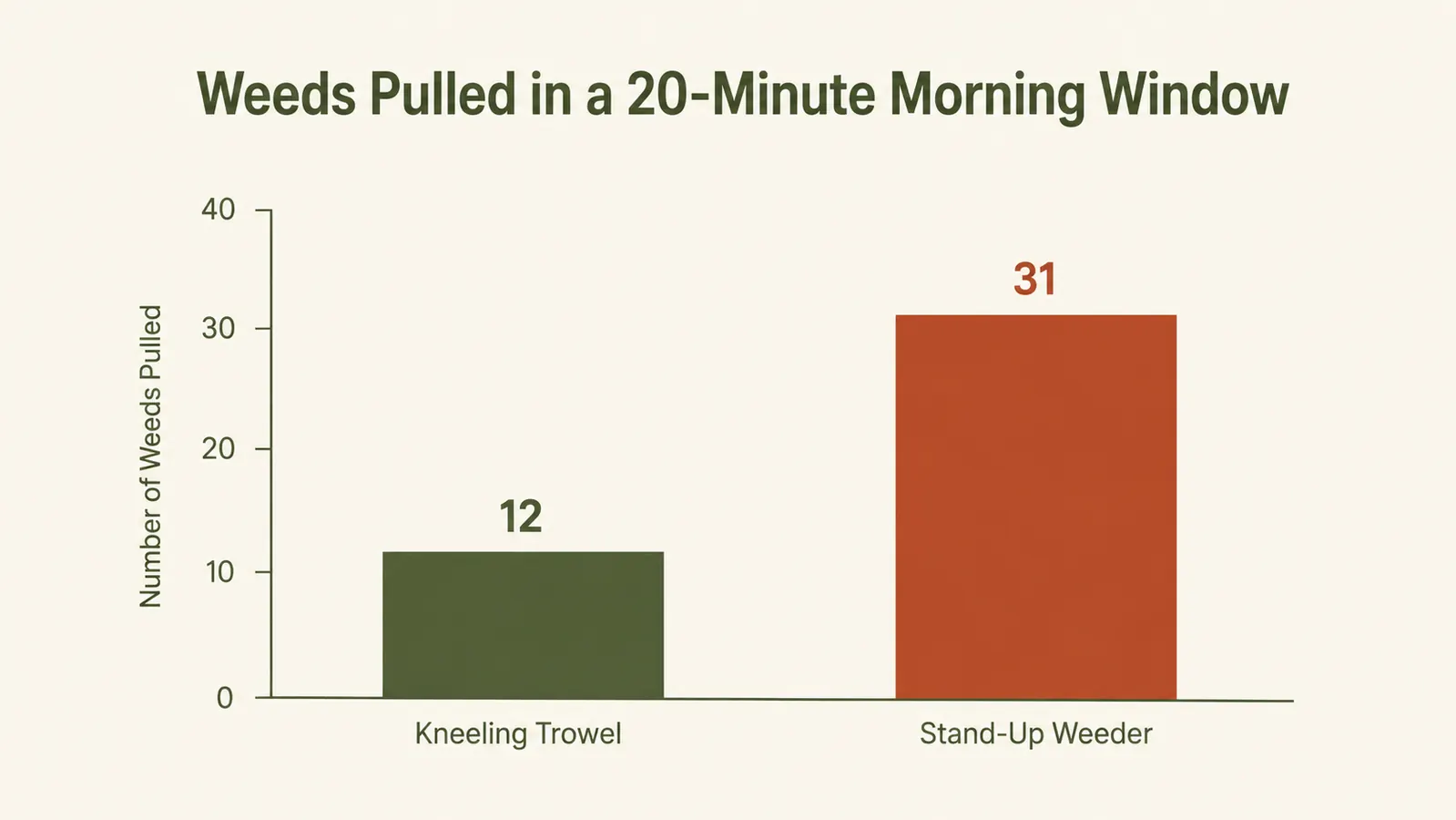
The speed comes from never breaking your standing rhythm. Step, press, pull, eject, step to the next weed. No kneeling down, no standing back up, no searching for where you set the trowel down in the grass. In my twenty minute window I can now move through a six foot stretch of a badly weeded bed and clear it almost entirely, something that used to take me most of a Saturday morning on my knees.
Step 5: Do a Two Minute Pass for the Ones You Missed
With about two minutes left in my window, I stop moving forward and instead walk back over the stretch I just cleared, looking for anything I stepped past or missed the first time. This is usually small stuff, a seedling I did not notice, a piece of root that broke off and is sitting on the surface. I either pull these by hand quickly since the deep root work is already done, or I leave them for tomorrow's pass if I am truly out of time.
Then I dump the bucket, wipe the claws off with an old rag if there is caked mud on them, and lean the weeder back against the fence post for tomorrow. The whole cleanup takes under a minute. I am inside and in the shower within my twenty minute window most mornings, which was simply not possible with a kneeling pad and a hand trowel.
What Else Helps
A few small habits make this method work better over a full season instead of just one good morning. I mulch behind myself as I clear a stretch, usually with whatever wood chips or straw I have on hand, because bare cleared soil is an invitation for the next round of seeds to germinate within a week or two. I also try to hit each stretch of bed on a rotation rather than waiting for it to look bad again, since a bed with a scattering of small weeds takes five minutes with the Fiskars, while the same bed left for a month takes twenty. And I keep a small pair of hand pruners in my back pocket during these sessions, since every so often there is a woody weed stem or a sucker at the base of a shrub that the claws are not built for, and it is faster to snip it than to fight it.
I also keep a small notepad taped inside a kitchen cabinet where I jot down which stretch I covered and roughly how long it took. It sounds excessive for something as simple as weeding, but after a full season of these notes I know almost exactly how long each bed takes me to redo, which means I can plan a morning around a fifteen minute job instead of guessing and running late for my shift. That kind of predictability matters more than any single tool when your whole gardening life happens in leftover minutes.
The tool did not give me more time in the morning. It just made the time I already had actually count for something.
Twenty Minutes Is Enough Time, With the Right Tool
If your weeding sessions keep dying on the vine because kneeling down and standing back up eats half the time you have, this is the fix. Step on it, pull, eject, move to the next weed, and you will be surprised how much of a bed you can clear before you have to leave for the day.
Amazon Check Today's Price on Amazon →