
I bought the REXBETI folding saw on a Tuesday in March because a hard freeze had split a limb on my crabapple tree and I didn't want to pay someone else to come out for a job that small. It was sixteen dollars and change at the time, which felt almost too cheap to trust, but I'd read enough reviews mentioning the SK-5 steel blade that I figured it was worth the gamble over another trip to the hardware store for something flimsier.
That first cut took about ninety seconds and left a cleaner edge than I expected from a folding tool that fits in a coat pocket. Eight months later, after a full season of pruning a mixed bed of shrubs, a lilac hedge that had gone untouched for two years before we moved in, and that same crabapple, I still reach for it before I reach for anything else in the shed. I've since bought a second one just to keep in the car, because I got tired of driving home to grab it when I spotted something at my mother's place that needed cutting back.
The Quick Verdict
A genuinely sharp, well-built folding saw that outperforms its price, best suited for branches up to about 4 inches thick and quick morning or evening pruning sessions.
Amazon Check Today's Price →Stop losing your evenings to dull loppers
If you've got twenty minutes before the light goes and a hedge that needs cutting back, a saw that actually bites on the first pass matters more than almost any other tool in the shed. This is the one I keep on the back porch, not buried in a drawer.
Amazon Check Today's Price on Amazon →How I've Used It
My property is a little under a quarter acre, and most of what I prune isn't ornamental in the fussy sense, it's practical. A crabapple that drops fruit if I don't thin it, a lilac hedge along the fence line, two overgrown forsythia bushes, and whatever deadwood turns up after a storm. I don't have a chainsaw and I don't want one for this kind of work. What I needed was something I could grab on my way out the door at six in the morning before my shift, use for fifteen or twenty minutes, fold up, and drop back in my jacket pocket.
The REXBETI has an 11-inch blade, which sounds long for a folding saw until you unfold it and realize most of that length is doing real work, not just sitting there for show. The handle has a rubberized grip with finger grooves that actually line up with where my hand naturally sits, which matters more than it sounds like it should when you're gripping something for twenty straight minutes in cold weather. My hands tend to cramp up in temperatures under 40 degrees, and this is the first pruning tool I've owned that didn't make that worse by the second week.
I tested it first on that split crabapple limb, roughly 3 inches across, still slightly green on one side. It took maybe fifteen strokes to get through cleanly. Later that same week I used it on drier, harder deadwood from a fallen forsythia branch, and it moved through that even faster, which tells you something about how the teeth are set up for pull-stroke cutting rather than push. I've since noticed I get the cleanest results when I let the blade do the work on the pull and barely press on the return, rather than sawing hard in both directions the way I used to with an older bow saw.
The Blade and Folding Lock, Up Close
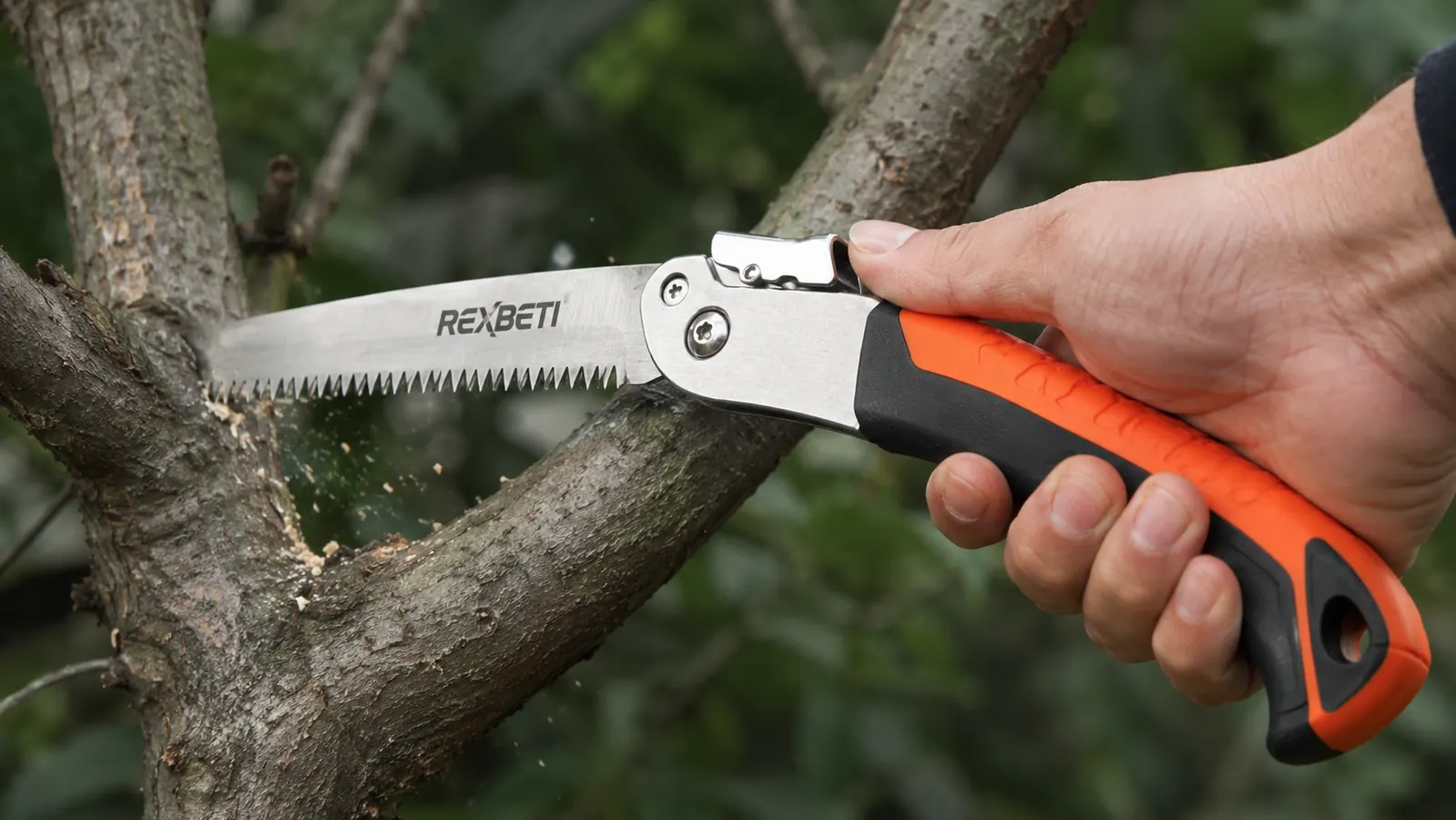
The blade is SK-5 carbon steel with what REXBETI calls hard teeth, and after eight months of use outdoors, sometimes left in a damp shed overnight when I forgot to bring it in, I've seen exactly one small spot of surface rust near the pivot screw. A quick wipe with an oiled rag took care of it. The teeth themselves haven't dulled in any way I can feel by hand or see under a loupe, which surprised me given how often I've used this thing on woody, older growth. My late father kept a pruning saw for decades that needed sharpening every spring, so I went into this expecting to do the same, and so far I simply haven't needed to.
The fold-and-lock mechanism is the part I was most skeptical of going in. Cheap folding saws tend to develop play in the hinge within a few months, enough that the blade wobbles slightly mid-cut and throws off your line. Mine still locks with a solid, audible click and doesn't have any detectable side-to-side movement when the blade is extended. I test this every few weeks out of habit now, mostly because I've been burned by other folding tools in the past, including a pruning knife that developed enough wobble within a single season that I stopped trusting it near my fingers.
One small annoyance: the release button to fold it back down takes a firmer press than I'd like, especially with cold hands in early spring. It's not a design flaw exactly, more a safety feature that occasionally slows me down when I'm trying to move fast between cuts. I've gotten used to bracing the handle against my palm and pressing with my thumb rather than trying to squeeze it one-handed, and once you find that motion it stops being a problem.
Cutting Through a Full Season
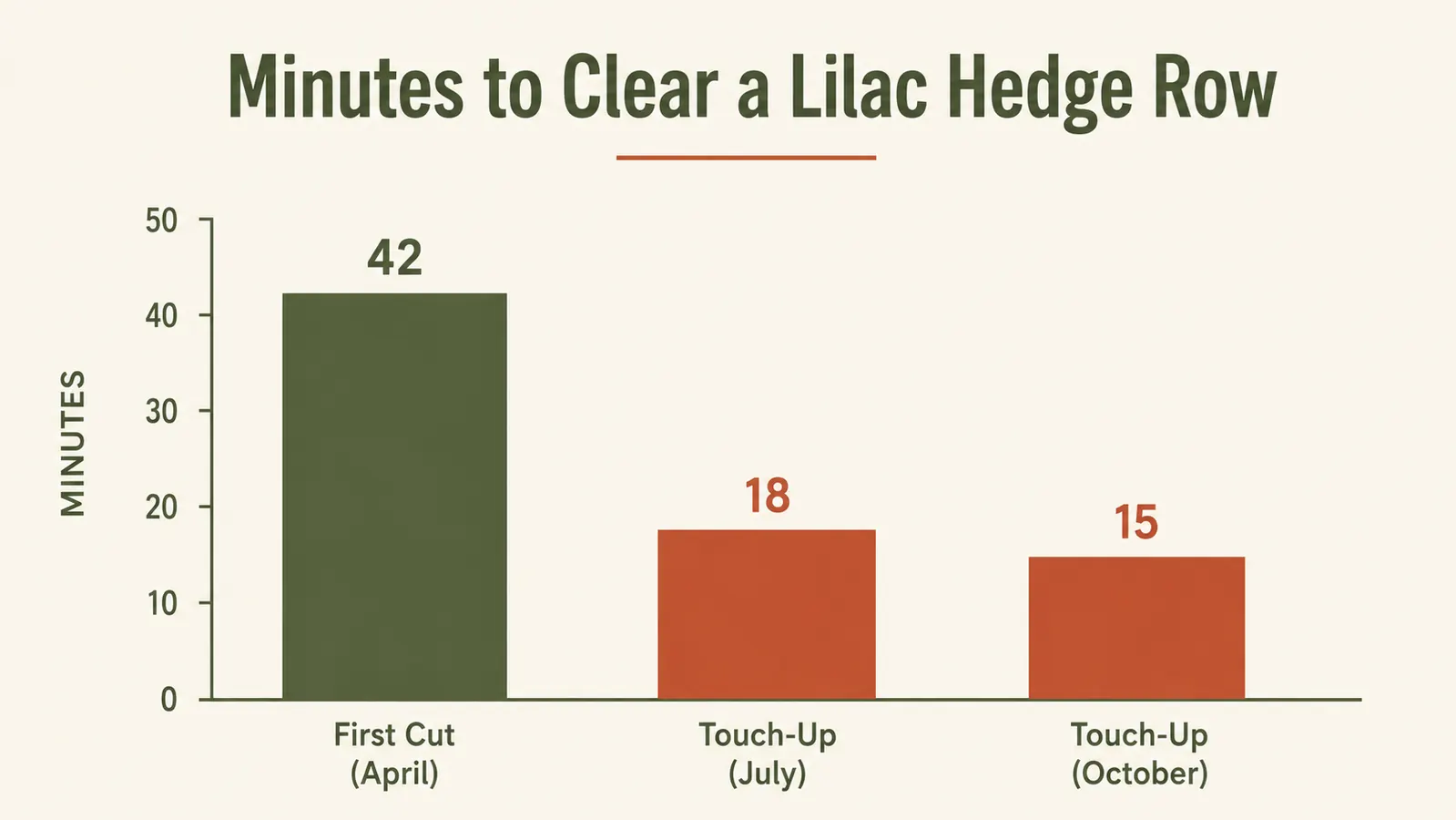
In April I used it almost daily for about two weeks, clearing winter damage and doing the hard cutback on the lilac hedge that the previous owners had let go wild. That hedge alone probably accounted for forty or fifty individual cuts on branches ranging from pencil-thick to close to 3.5 inches. The saw never bound up in the wood, which had happened to me before with a cheaper folding saw that would catch and require a second angle to finish a cut. Most mornings that stretch I got out for about twenty minutes before I needed to get ready for the day, and I could reliably clear a full section of hedge in that window.
Summer use was lighter, mostly touch-up work on new growth and a couple of dead canes on a rose bush that had gotten black spot. By July the blade had seen enough use that I expected some drop-off in sharpness, but side-by-side against a fresh cut on similar-diameter wood, I honestly couldn't tell the difference. I did notice the folding action had loosened up slightly, in a good way, it opens and closes a bit more smoothly now than it did brand new, without any looseness in the locked position.
Fall was the real test. Storm cleanup after a windy October night left me with a downed forsythia branch close to 4 inches at its thickest point, right at the upper edge of what I'd trust this saw to handle without excessive effort. It took real arm work, more than thirty strokes and a break halfway through, but it got through clean. Anything thicker than that and I'd reach for loppers or a bow saw instead, and I think that's a fair limit to expect from an 11-inch folding blade. By the time the leaves were down for good, I'd used this saw in near-freezing mornings, humid July evenings, and everything between, and it never once felt like it was struggling more than the wood itself warranted.
Maintenance and Care
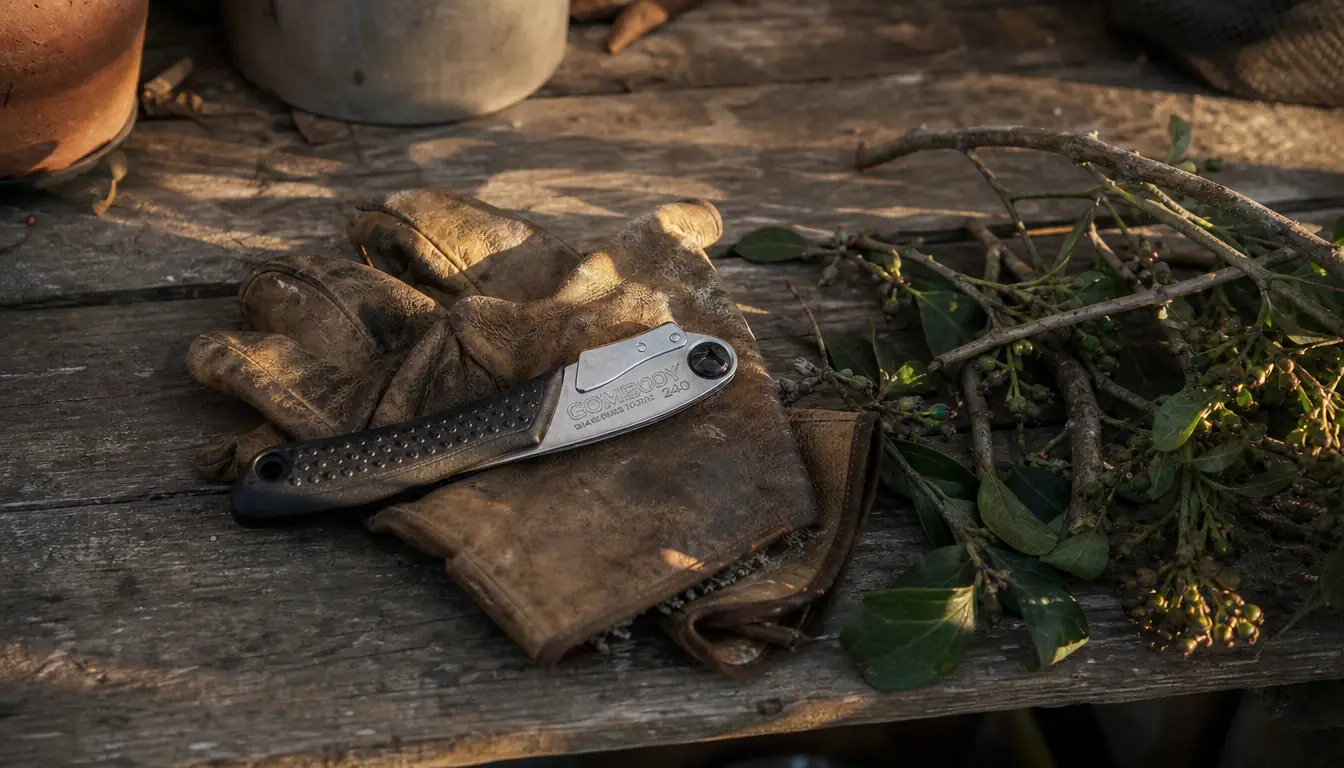
I don't baby this tool, which is part of the point of a saw like this, but I do a few small things that I think have kept it performing well. I wipe the blade down with an old rag after any session where sap has built up, especially on the lilac and forsythia, since dried sap seems to be what actually dulls the teeth faster than the wood itself. Once every couple of months I put a light coat of household oil on the blade and the pivot point before folding it away for a stretch of days I know I won't need it.
I don't store it in a damp corner of the shed anymore after that one rust spot showed up near the pivot. Now it lives in a small canvas tool roll on a shelf, which keeps it dry and also keeps me from grabbing it by the blade in the dark, which I did exactly once and don't recommend to anyone.
Where It Struggles
The honest tradeoffs are worth naming. This is not a saw for anything approaching small-tree removal. Once you're past 4 inches in diameter, the blade length works against you and you end up sawing at an angle just to keep the full tooth line engaged, which is awkward and slower than it should be.
It also doesn't come with a sheath or holster in the version I bought, just the folding mechanism itself, so if you're the type who likes to clip a tool to a belt loop, you'll want to buy one separately or just keep it in a jacket pocket like I do. And while the grip is comfortable for me, my hands are on the smaller side, and my husband, who has larger hands, finds the handle a touch short for extended use.
Alternatives I Considered
Before buying this one, I looked at a couple of Japanese-style pull saws with replaceable blades, which get excellent reviews for precision cuts on live wood in bonsai and fruit tree circles. They're a legitimate option if you're doing detailed orchard pruning, but they run more expensive and the replacement blades are another recurring cost. For the kind of general yard work I do, that felt like more tool than I needed.
I also nearly bought a cordless mini chainsaw, which a neighbor swears by for anything over 3 inches. I decided against it mainly because of the maintenance, charging batteries, oiling the chain, and the noise at six in the morning when I'm trying not to wake anyone up. A folding hand saw fits the quiet, small-window style of gardening I actually do, and I'd rather spend those twenty minutes actually cutting than untangling a charger cord from the shed shelf.
What I Liked
- SK-5 steel blade stays sharp through a full season of regular use
- Folding lock holds firm with no wobble after eight months outdoors
- Cuts cleanly through wood up to about 3 to 3.5 inches without binding
- Compact enough to carry in a jacket pocket for quick morning sessions
- Price point makes it an easy tool to keep as a spare
Where It Falls Short
- Struggles once branches approach 4 inches or more
- No sheath included in the box
- Release button requires a firm press, awkward with cold hands
- Handle runs a little short for larger hands
It's not a tool I show off to anyone. It's just the one that's always in my pocket when the light is good and I only have twenty minutes.
Who This Is For
This saw makes the most sense for someone with a real yard and a real schedule, the kind of gardener who gets an hour after dinner or a stretch before work and needs a tool that's ready to go without prep. If your pruning list is mostly shrubs, hedges, small ornamental trees, and the occasional storm cleanup on branches under 4 inches, this covers almost everything you'll run into over a season, and it does it at a price that doesn't sting if you eventually lose it in a brush pile.
Who Should Skip It
If you're managing a mature orchard, doing regular tree removal, or routinely cutting branches over 4 inches thick, this isn't the right tool for the job and you'll end up frustrated fighting wood it wasn't built to handle. In that case a bow saw, pole saw, or small chainsaw will save you time and effort. This is a hand tool for hand-tool-sized jobs, and it's honest about that limit.
The saw I actually reach for before my morning coffee cools
After a full season of storms, hedge cutbacks, and one stubborn crabapple limb, this is still the tool sitting by my back door. If your pruning list has been piling up, today's price makes it an easy one to try.
Amazon Check Today's Price on Amazon →