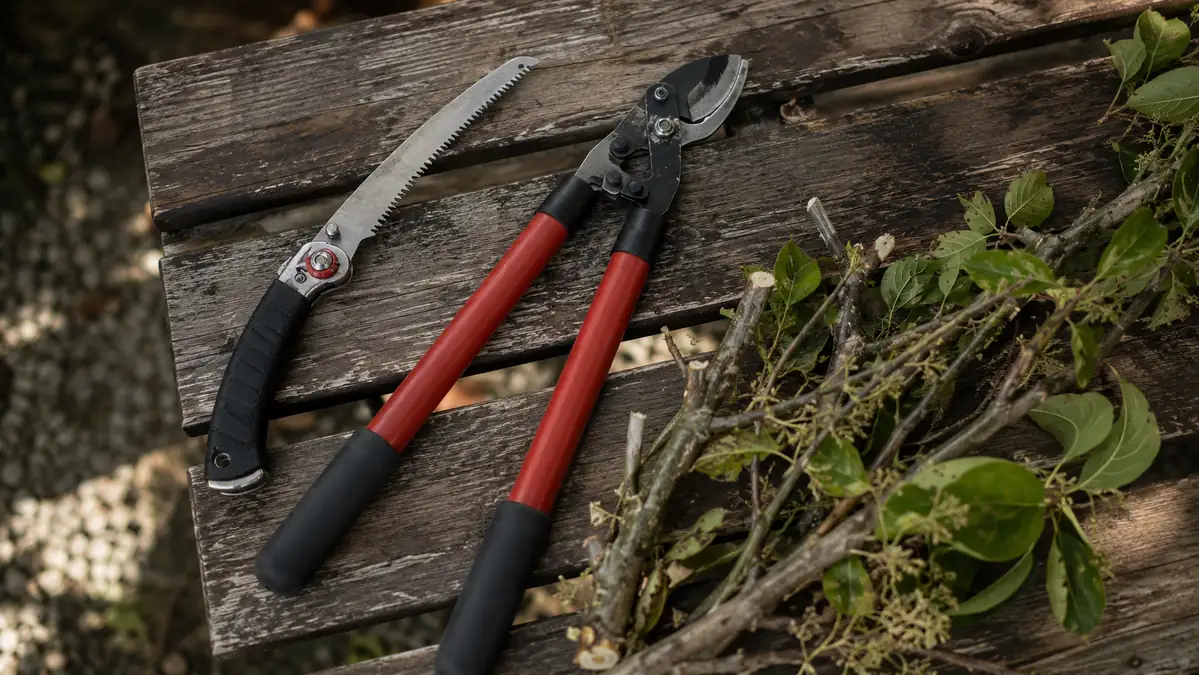
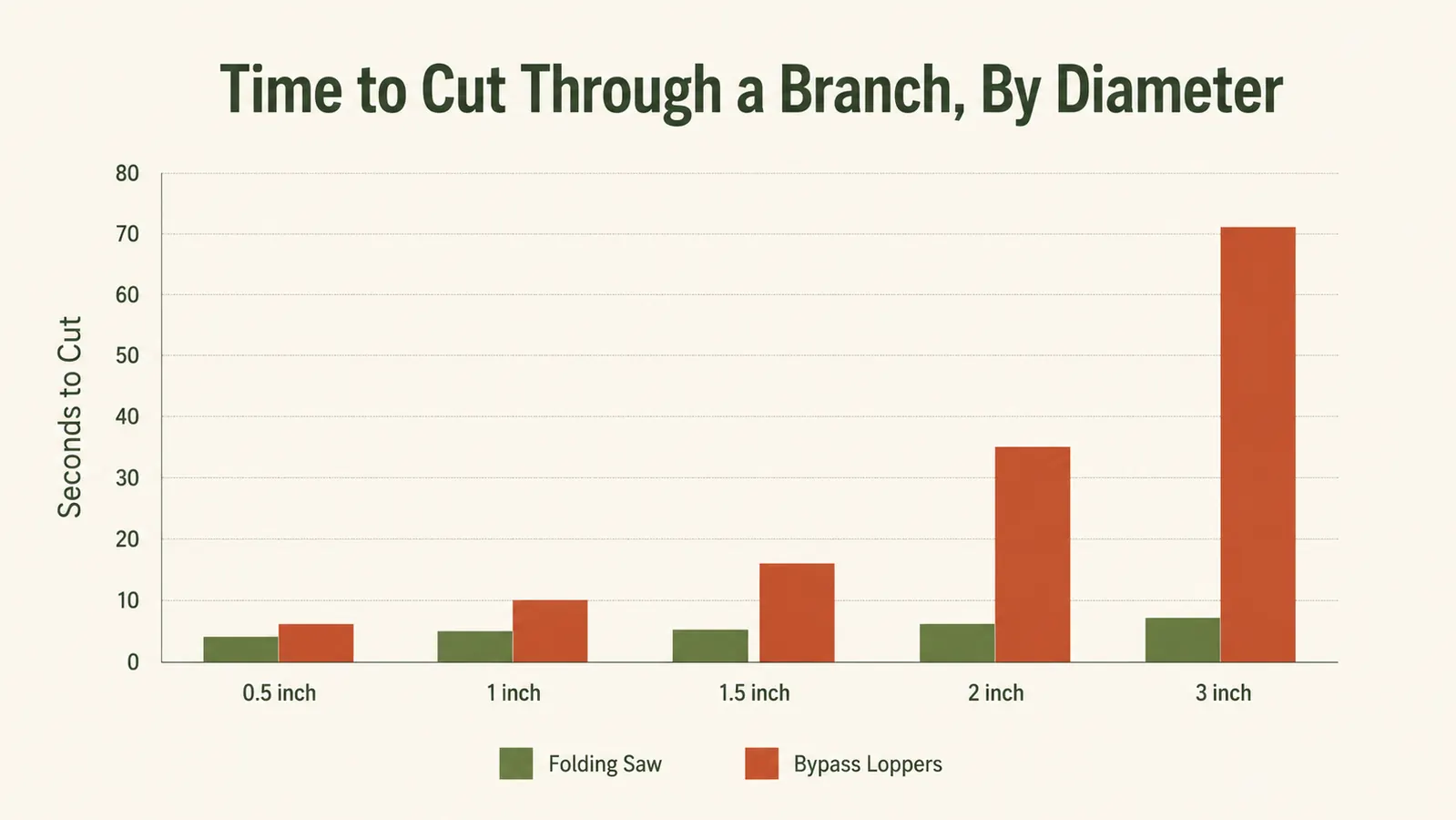
If the branch in front of you is under an inch and a half thick, reach for bypass loppers first. No contest there, they are faster and they do not ask much of your arm. But once you get past that mark, up into the two and three inch range where a hedge or an old fruit tree has gone properly woody, loppers start to fight you, and that is exactly where the REXBETI folding pruning saw earns its spot on my belt. I have carried one for two full seasons now, through a spring hedge cleanup and a winter storm that dropped half my neighbor's silver maple onto my side of the fence, and it has not let me down on either job.
This is not a lab test with a torque wrench and a stopwatch. It is what actually happened in my own yard, on the mornings I had forty five minutes before my shift started and a pile of overgrown viburnum that was not going to prune itself, and on the evenings after dinner when the light was going soft and I just wanted the fence line cleared before the weekend company showed up. I have used both tools enough times, on enough different wood, in enough different weather, to tell you honestly where each one earns its keep and where it lets you down.
I should say up front that I am not selling you on ditching one tool for the other. I keep both hanging in my shed, and I have for years. The point of laying them side by side here is narrower than that. It is about the moment you are standing in front of a branch, unsure which tool to grab, because that decision is where most of the frustration in pruning actually comes from. Grab the wrong one and you either waste ten minutes fighting wood that will not give, or you spend more effort than the job needed.
| What Matters | REXBETI Folding Saw | Bypass Loppers |
|---|---|---|
| Today's Price | Check today's price on Amazon | Mid-range today |
| Best Branch Diameter | Handles branches up to about 3 inches thick | Most comfortable up to about 1.5 inches |
| Cut Type | Back and forth pull stroke through hardwood | Single squeeze shear cut |
| Speed on Small Wood | Slower, takes several strokes | Fast, one squeeze and it is done |
| Weight | About 10 ounces folded | 1.5 to 2 pounds depending on handle length |
| Storage | Folds shut, fits a back pocket or small tool bag | Needs a full length sheath or a hook on the wall |
| Maintenance | Wipe the SK-5 blade dry, oil the pivot now and then | Keep the blades clean, sharpened, and the pivot bolt oiled |
| Muscle Fatigue on Thick Wood | Some arm work, but the hardened teeth do most of it | Wears out your grip fast past an inch and a half |
| Learning Curve | None, same motion as any hand saw | None, but jaws can slip on knotty or green wood |
Where the REXBETI Folding Saw Wins
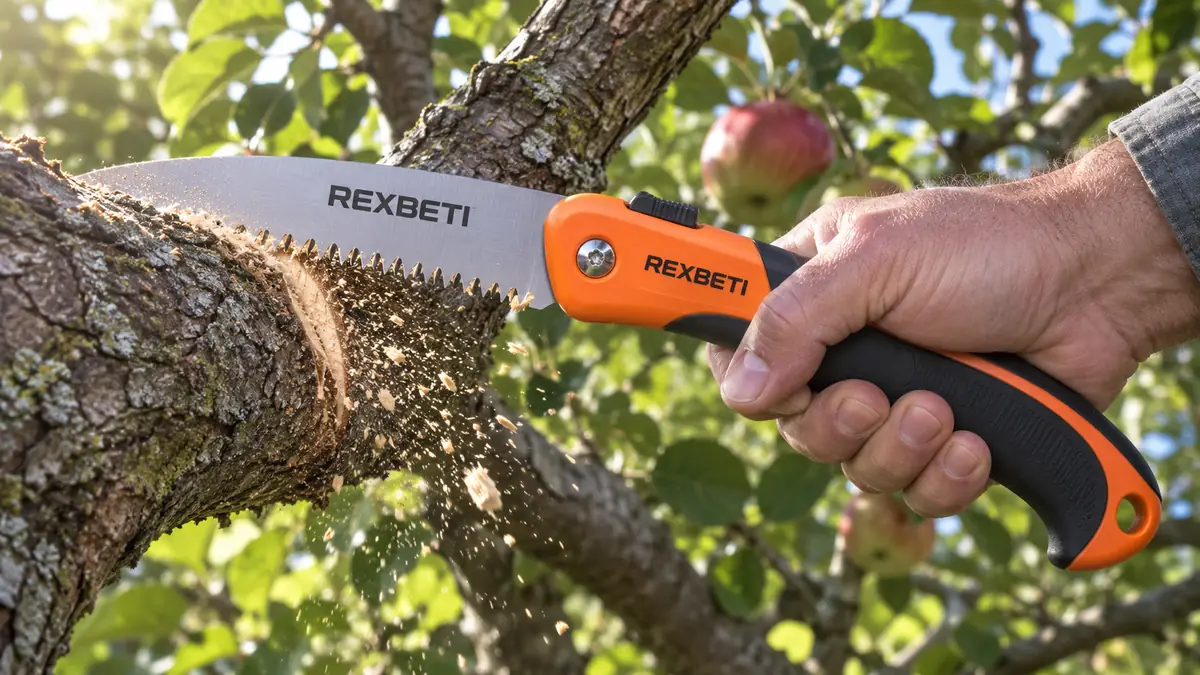
The REXBETI wins the moment you are past what loppers can handle without a fight. I proved that out on the old apple tree in my side yard, a tree nobody had touched since sometime around 2019 judging by how gnarled the water sprouts had gotten. My loppers did not stand a chance against branches that thick. The 11 inch blade with its SK-5 steel teeth went through a three inch limb in maybe eight or nine pull strokes, no wrenching, no bent jaws, no snapped tool. That is the whole reason I bought it in the first place, after my old bypass loppers slipped off a stubborn branch and nearly took my knuckle with it on a wet Tuesday morning two springs back.
It also wins on portability, and that matters more than it sounds like it should when you garden in small windows of time. It weighs next to nothing, folds down to about the size of a large kitchen knife, and rides in the back pocket of my canvas apron for an entire Saturday without me noticing it is there. When I get called out to look at a downed branch after a storm, or I am walking the fence line at dusk after dinner deciding what needs to come down before the weekend, I do not have to go back for a second tool. One saw, folded shut, covers almost everything from a wrist thick sucker to a genuine limb.
There is also the matter of what it can do outside pure pruning, which counts for something on a budget-minded shed. The same blade that took down that apple limb also cleared a tangle of scrub brush along the back fence line that had been bothering me for a full year, and it went camping with my husband last October to cut kindling and clear a fallen sapling off a trail. A pair of loppers cannot do half of that. For the price, having one tool that pulls double duty in the yard and on a trip is worth something real.
The locking mechanism deserves a mention too, because it is the kind of small detail that only matters once you have used a cheap folding saw that does not have one. The blade locks solidly open with a firm click before you make your first cut, and it locks shut again just as firmly when you fold it away, so it does not ride around loose in an apron pocket with an exposed edge. After two seasons of pulling it in and out of that pocket a couple dozen times a week, the lock has never loosened up or started to feel sloppy.
Where Bypass Loppers Win
Loppers win the second you are doing volume work on wood under an inch thick. Thinning out raspberry canes, cutting back last year's growth on my roses, clearing the dead wood out of an ornamental grass clump, all of that goes faster with a single squeeze than with any saw stroke. On a morning where I have thirty stems to cut before the sun gets high enough to make the greenhouse unbearable, loppers save real minutes, and minutes are the thing I am shortest on most days before a twelve hour shift.
They also win on comfort across a long stretch of small cuts. A saw asks your forearm to repeat the same pull motion over and over, and by branch fifteen or twenty that starts to add up, especially early in the morning before my hands have really woken up. Loppers with a long handle give you leverage without much wrist strain, so if your pruning list is mostly small stuff, a decent pair of bypass loppers will treat your arm better over the course of an hour than any saw will.
And there is a cleanliness to a lopper cut on live, green wood that a saw simply cannot match. A sharp bypass blade shears through a rose cane or a young shrub stem in one clean pass, leaving a smooth face that heals faster and looks tidier than a sawed edge. On anything green and springy, a saw blade tends to grab and tear a little before it bites, so for spring shrub shaping, loppers stay the better choice no matter how good your saw is.
One honest caution on loppers, since I am not here to talk them up either. Cheap bypass loppers with a soft blade dull fast, and a dull lopper blade is worse than no lopper at all, because it crushes the stem instead of cutting it cleanly, which invites disease into whatever you just pruned. If you go the lopper route for your everyday cuts, spend enough to get a blade that holds an edge, and keep a small file in your shed to touch it up a couple times a season.
Stop Wrestling Loppers Through Wood They Were Never Built to Cut
If you have ever had a pair of loppers slip off a thick branch or leave you sweating over a limb that should have taken thirty seconds, the REXBETI folding saw fixes that specific problem. The SK-5 steel blade is built for exactly the wood loppers give up on.
Amazon Check Today's Price on Amazon →
Who Should Buy Which
If most of your pruning is roses, berry canes, small shrubs, or anything under an inch and a half, keep a good pair of bypass loppers as your main tool and let them do the volume work. They will get you through a spring cleanup faster and with less strain on your hands than any saw would. But if you have any hedges that have gone leggy, any fruit trees that have not been touched in a few years, or you just want one tool that will not quit on you when a branch turns out to be thicker than it looked from six feet away, the REXBETI folding saw is the one I would tell you to buy first.
It folds small enough to live in a coat pocket, it costs less than most lopper sets, and it has gotten me through two seasons of overgrown viburnum and one very large fallen maple limb without a single complaint. Most gardeners I know, myself included, end up keeping both, but if I had to walk into a shed with only one tool for anything over an inch, it would be this saw. It is the one that has never once left me standing over a branch wondering if I bought the wrong tool for the job.
If you are working with a small city lot and mostly perennials and roses, start with loppers and add the saw later once something bigger comes up, because it will. If you have an established yard with any older shrubs or fruit trees on it, or you inherited a property with hedges nobody has kept up with, buy the saw first. It is the cheaper tool of the two, and it is the one that will actually get used the moment a branch surprises you, which in my experience happens more often than anyone expects.
I think about it the same way I think about buying boots before you plan a hike. You do not wait until you are three miles in with a blister to wish you had bought the right pair. The saw is cheap enough, at today's price, that there is no real reason to wait until a branch beats you before you own the tool built to handle it. Buy it in the off season if you can, so it is already hanging in the shed the first time you need it.
The Tool I Reach for First When a Branch Is Bigger Than It Looks
Two seasons in, this is still the saw riding in my apron pocket every time I head out to the yard. Check today's price before you head out for your next pruning session.
Amazon Check Today's Price on Amazon →